
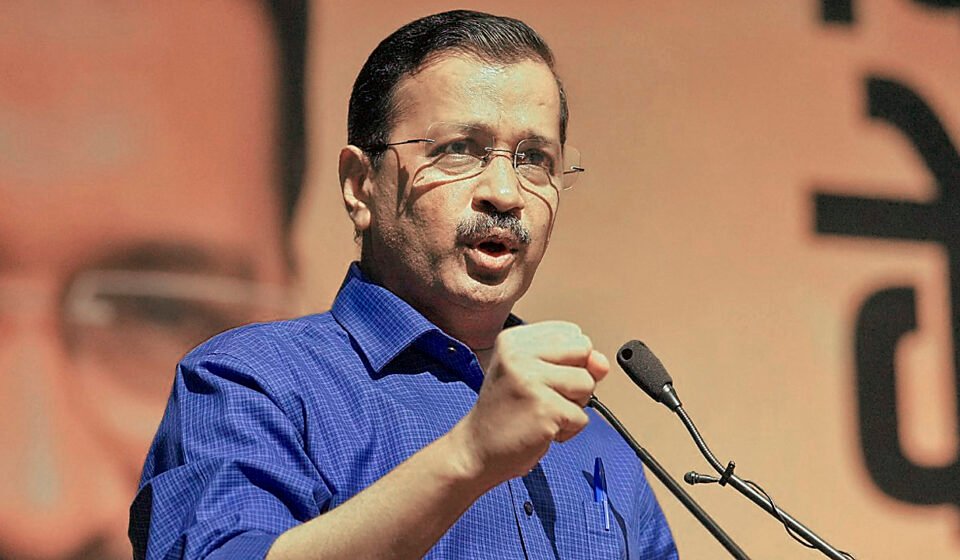

Arvind Kejriwal demands PM Modi’s resignation, calling the US 30-day waiver for Russian oil a “national insult” and a blow to sovereignty.
AAP National Convener Arvind Kejriwal has called for Prime Minister Modi’s resignation following a 30-day US “waiver” allowing India to purchase Russian oil.
Kejriwal labeled the move a “diplomatic surrender,” questioning why a nation of 1.4 billion requires a foreign power’s approval to meet its energy needs.
In a scathing attack on India’s current foreign policy, Arvind Kejriwal, the National Convener of the Aam Aadmi Party (AAP), demanded the resignation of Prime Minister Narendra Modi on March 6, 2026. The controversy erupted following the US Treasury Department’s announcement of a temporary 30-day waiver for Indian refiners to settle payments for Russian crude oil. Kejriwal took to social media to condemn the development, asserting that India’s status as a sovereign republic is being undermined by a “vassal-like” dependence on Washington’s directives. In New Delhi, this political firestorm has shifted the narrative from energy logistics to national dignity, as the opposition accuses the PM of bowing to external pressures from the Donald Trump administration.
The geopolitical landscape changed drastically following the February 28, 2026, US-Israeli strikes on Iranian infrastructure, which sent global oil prices into a tailspin. Historically, India has leveraged Russian oil as a strategic hedge against Middle Eastern volatility. However, the US has tightened sanctions to isolate Moscow. The recent “waiver” is a 30-day window granted by the US to prevent a global supply shock, yet the terminology of a “permission-based” framework has provided the opposition with significant political ammunition. Kejriwal argues that the evolution of India’s strategic autonomy is being reversed, turning India into a junior partner rather than a global leader.
The diplomatic waiver has triggered polarized reactions across the political spectrum:
Arvind Kejriwal (AAP): “India is a civilizational power. It is shameful that we now need ‘waivers’ from the US to run our kitchens. If the PM cannot protect our sovereignty, he must step down.”
Rahul Gandhi (Congress): echoed the sentiment, stating, “The Prime Minister’s ‘personal chemistry’ with foreign leaders has become a liability for India’s national interest.”
US Administration: US Treasury Secretary Scott Bessent clarified that the waiver is a “humanitarian and economic necessity” to stabilize global markets and is not intended to be a permanent policy shift.
Expert Analysis: Dr. Vikram Mehra, a geopolitical strategist, noted, “The wording of ‘permission’ is a PR disaster for the Indian government, even if the oil flow is a tactical win for the economy.”
The implementation of this 30-day window has direct consequences for the Indian consumer. If India adheres to the US timeline and shifts away from Russian oil, experts predict a 15–20% surge in domestic petrol and diesel prices by April 2026. Kejriwal’s rhetoric strikes a chord with the middle class, which is already grappling with inflation. Economically, the reliance on a 30-day “grace period” creates massive uncertainty for Indian oil corporations like IOCL and BPCL, who cannot plan long-term procurement while waiting for Washington’s next decree.
Evidence-based analysis suggests that the Kejriwal-led opposition is attempting to reclaim the Nationalist Narrative—a domain traditionally dominated by the BJP. By framing the US waiver as an “insult to the tricolor,” the AAP is appealing to a sense of wounded pride. Geopolitically, this marks a test for India’s multi-alignment policy. If India fails to assert its right to buy oil without foreign “approvals,” it risks setting a legal and diplomatic precedent that could affect future defense and technology trade with Russia and China.
The next four weeks are critical. The Ministry of External Affairs (MEA) is expected to issue a formal clarification to de-escalate the “permission” narrative. By March 25, 2026, the Indian government must decide whether to seek an extension of the waiver or proceed with Russian trade regardless of US sanctions. Stakeholders are closely watching for a potential high-level meeting between Indian and American energy officials to redefine the terms of this engagement. Protests by AAP and Congress are slated to intensify in the capital over the coming week.
The demand for PM Modi’s resignation over the Russian oil waiver highlights a deep-seated anxiety regarding India’s place in a bipolar world. While the government may view the waiver as a pragmatic win to keep fuel prices low, the political cost of the “permission” branding is proving to be high. This is a moment for civic awareness to distinguish between tactical diplomacy and fundamental sovereignty. Ultimately, the next 30 days will determine if India’s foreign policy is dictated by its own needs or by the shifting winds of Washington.